This comprehensive consumer-protection guide explains how to choose a trustworthy apostille or legalization service, with special focus on international adoption dossiers, immigration petitions, and civil status updates. It draws upon verified information from the Hague Conference on Private International Law (HCCH), the U.S. Department of State, and various state Secretary of State (SOS) offices.
Understanding Apostilles And Legalizations
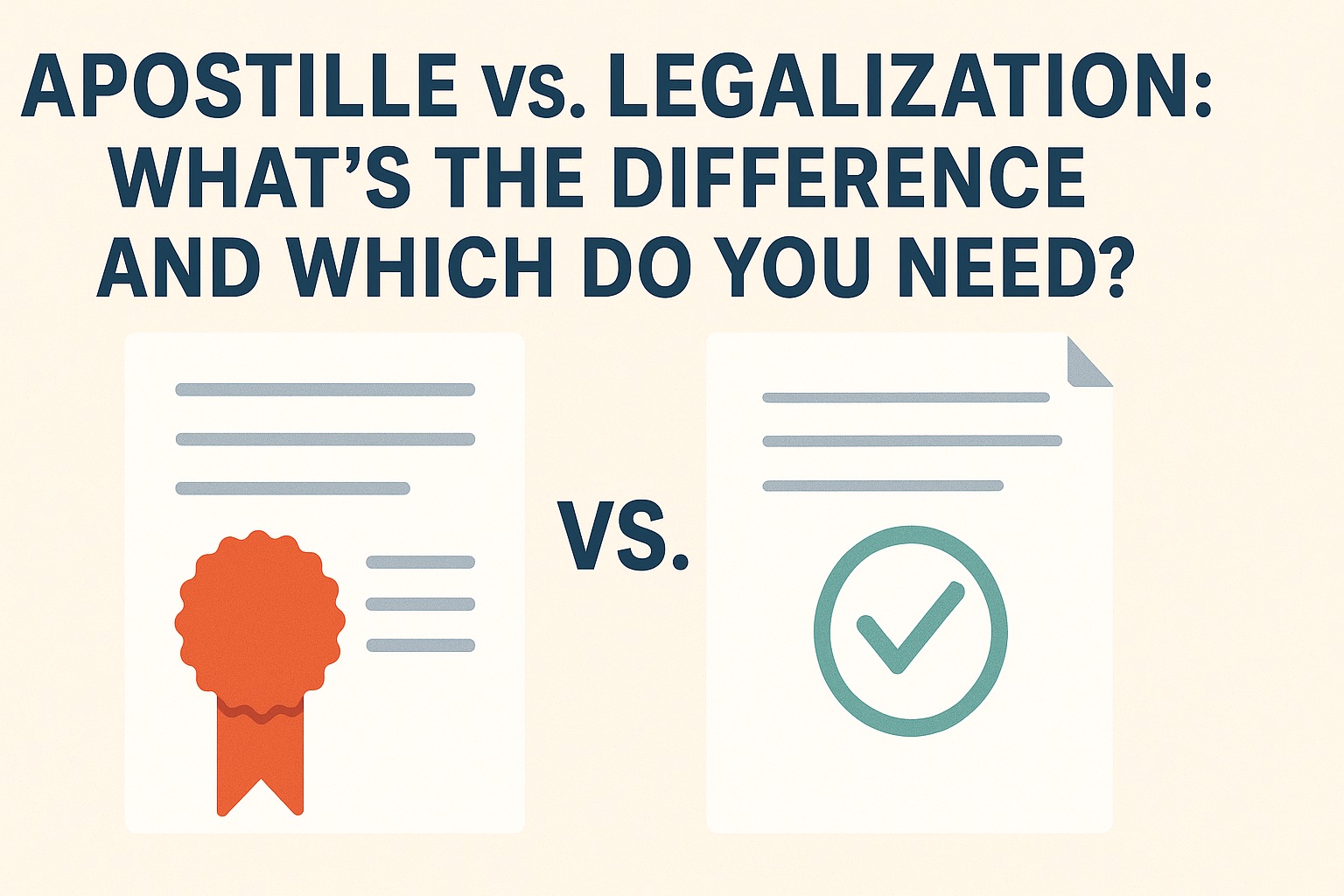
An apostille is an official certificate issued by a government authority that authenticates the origin of a public document, allowing it to be used in another country that is a party to the 1961 Hague Convention.
Legalization is used when the destination country is not part of the Hague Convention. In this case, a document must undergo multiple authentications, often concluding with the embassy or consulate of the destination country.
Hague Conference on Private International Law (HCCH)
U.S. Department of State – Authentications
Why Choosing The Right Service Matters
Apostille and legalization services handle important legal and personal documents. A trustworthy provider ensures that your paperwork remains secure, accurate, and accepted by foreign authorities, whereas unreliable providers can lead to financial loss, delays, or privacy risks.
Better Business Bureau – Standards For Trust
How To Vet A Provider
Pricing Transparency
A reputable provider clearly separates government fees from service fees and provides direct links to the official fee schedule.
California Secretary of State – Apostille FAQs
Texas Secretary of State – Authentication Division
Realistic Turnaround Claims
No private company can shorten a government agency’s official processing time. Reliable providers explain each step and provide honest time estimates, rather than offering “same-day everywhere” guarantees.
U.S. Department of State – Office of Authentications
Proof Of Mailing And Custody
Legitimate services provide carrier tracking numbers, confirmation emails, and scanned copies of the submitted packets.
Data Privacy And Security
Before hiring a provider, verify that they have an active privacy policy that describes how your personal information and document copies are protected and stored.
Refund And Redo Policies
A credible service clearly outlines its refund terms. If an error occurs on their side, they should refund the service fee or correct the issue at no cost to you.
Scenario-Based Consumer Guidance
Below are everyday real-world situations that often require apostille or legalization services, along with the best practices for each.
International Adoption Dossiers
International adoptions require documents to be authenticated for use abroad. Many foreign authorities accept only apostilles issued within six months.
Typical Documents
Home study reports, birth and marriage certificates, divorce decrees, background checks, and court adoption orders.
Special Handling
Sealed or confidential records should be certified properly by the court. Translations must be professionally completed and notarized. Confirm whether the child’s country is part of the Hague Convention.
U.S. Department of State – Intercountry Adoption
Checklist
- Verify the country’s Hague membership
- Obtain certified or original documents
- Notarize and translate when required
- Submit to the proper authority for apostille or authentication
- Track custody and mailing
Immigration Petitions
Immigration filings often involve presenting U.S. documents to foreign governments.
Typical Documents
Birth, marriage, and divorce certificates, police records, court orders, diplomas, and USCIS notices.
Special Handling
FBI background checks are federal documents and must be apostilled by the U.S. Department of State. Confirm whether the translation must be attached before the apostille.
New York Department of State – Apostille Authentication
Checklist
- Determine issuing jurisdiction
- Obtain notarized translations if required
- Submit to the correct competent authority
- Keep all mailing receipts and tracking numbers
- Retain digital copies for records
Civil Status Updates
These include name changes, divorces, deaths, and amended records that must be recognized abroad.
Typical Documents
Updated vital records, name change orders, death certificates, and amended court judgments.
Special Handling
Use the most recent certified version of each record. Confirm that the signatures and seals meet your state’s apostille requirements.
Texas Secretary of State – Apostille and Authentication FAQs
Checklist
- Obtain updated certified records
- Check for correct seals and signatures
- Translate when required and notarize the translation
- Submit to the appropriate authority
- Keep proof of mailing and delivery
Red Flags To Avoid
- Promises of “government-issued” apostilles by private firms
- No separation of government and service fees
- Unverifiable address or no contact information
- Unrealistic “same-day” claims
- No written refund or privacy policy
California SOS – Consumer Alert
FAQs
1. Do I need a service, or can I apply for an apostille myself?
You can apply directly to your state’s Secretary of State or the U.S. Department of State. Services are optional and meant for convenience.
2. What if my document is going to a country not in the Hague Convention?
You will need authentication at the state and federal level, followed by legalization at the country’s embassy or consulate.
3. Can translations be apostilled?
Only if the translation is first notarized. The apostille certifies the notary’s signature, not the translation content.
4. Are apostilles valid permanently?
Yes, an apostille does not expire, but some foreign authorities require documents to be issued within a recent period.
5. How can I verify that a service is legitimate?
Check the business registration, BBB profile, and whether their information matches government office procedures.
Disclaimer
This article is for educational and informational purposes only. It is not legal advice. Apostille and legalization procedures differ by state, federal agency, and destination country. Always confirm current requirements with the official Secretary of State, the U.S. Department of State, or the relevant foreign consulate before submitting documents. The American Apostille Association assumes no liability for outcomes based on this information.